
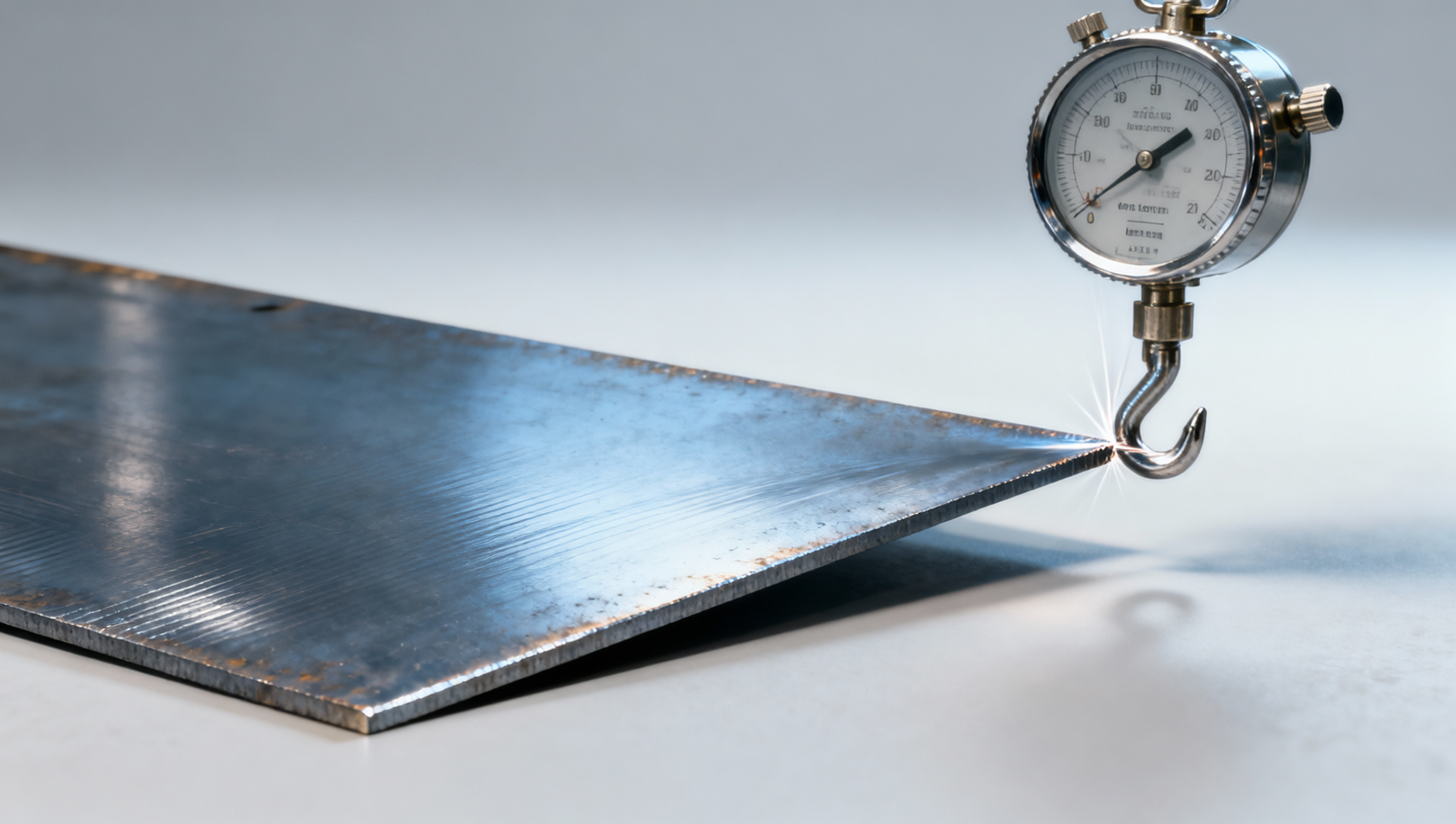
When reviewing carbon steel plate mill test reports, knowing which values are verified onsite—and which rely on lab testing or manufacturer declarations—is critical for procurement personnel, quality controllers, and project managers. Unlike aluminium bar or I beam/H beam steel certifications, mill test reports for carbon steel plate often mix witnessed, sampled, and calculated data. This article clarifies exactly what’s confirmed during onsite inspection—tensile strength, yield point, elongation—and what isn’t, helping users, distributors, engineers, and safety managers make informed, compliant decisions across sourcing, fabrication, and installation.
What Is a Mill Test Report (MTR) — And Why Does Onsite Verification Matter?
A Mill Test Report (ASTM A6/A6M, EN 10204 Type 3.1 or 3.2) is the formal document issued by the steel producer certifying that a specific heat or batch of carbon steel plate complies with contractual and standard requirements. It includes chemical composition, mechanical properties, dimensional tolerances, and heat treatment status. But not all values carry equal evidentiary weight.
Onsite verification refers to tests conducted in the presence of a third-party inspector—or client representative—at the mill during production. These witnessed tests provide direct, real-time confirmation of physical properties. In contrast, lab-tested values are drawn from samples taken at the mill but analyzed offsite, while declared values rely solely on the mill’s internal process control records without independent sampling or testing.
For projects governed by ASME BPVC Section II, ISO 3834, or EN 1090-1, misclassifying unverified values as “witnessed” can trigger non-conformance, rework, or rejection—especially in pressure vessel, structural bridge, or offshore applications where traceability is auditable down to the heat number.
This table confirms that tensile strength, yield point, and elongation are routinely witnessed onsite—provided the contract specifies ASTM A6/A6M Type 3.2 or EN 10204 3.2 certification. However, their validity hinges on correct sampling location (mid-plate, transverse orientation), minimum thickness (≥12 mm for full-thickness coupons), and test temperature (23 ± 5°C per ASTM E18).
Values That Are NOT Verified Onsite — And Where They Come From
Chemical composition (C, Mn, Si, P, S, Cu, Ni, Cr, Mo), hardness (HBW), impact toughness (Charpy V-notch), and bend test results are rarely witnessed onsite in routine carbon steel plate MTRs. Instead, they follow distinct verification pathways:
- Chemical analysis: Typically performed via OES (Optical Emission Spectrometry) on ladle samples pre-casting. Verified only if the buyer mandates heat-specific spectrographic reports—not just mill-declared ranges.
- Hardness: Measured on cut specimens post-rolling, but usually done in the mill lab—not in the presence of an inspector. ASTM A370 allows Brinell or Rockwell, with tolerance ±15 HBW for plates ≥25 mm thick.
- Impact testing: Required only for plates ordered to ASTM A516 Gr. 70N or EN 10028-2 P355NL1. Samples must be taken transversely, sub-sized to 10×10 mm, and tested at −20°C or lower. Witnessing occurs only if explicitly specified in purchase order clause 7.3.2.
The absence of onsite verification for these parameters doesn’t imply unreliability—but it does shift responsibility. For example, Charpy impact energy values (e.g., 27 J at −20°C) reflect statistical process control, not individual plate validation. If 3 out of 10 heats fail impact retest, the entire lot may require 100% ultrasonic testing (UT) per ASTM A435, adding 7–10 business days to delivery.
These values remain essential for weldability assessment (Pcm ≤ 0.25), low-temperature service qualification, and corrosion resistance prediction—but procurement teams must verify whether their PO includes witnessing clauses for them. Without such clauses, they’re treated as mill-declared, not independently verified.
How to Specify Onsite Verification in Your Purchase Order
Clarity in procurement documentation prevents ambiguity at inspection. To ensure tensile, yield, and elongation values are witnessed onsite, your PO must include:
- Explicit reference to EN 10204 Type 3.2 or ASTM A6/A6M Type 3.2 certification;
- Requirement for third-party witness (e.g., TÜV, SGS, Bureau Veritas) during tensile testing;
- Sampling instruction: “Full-thickness, transverse tensile specimen per ASTM A370, taken from mid-width, mid-length position”;
- Test temperature control clause: “All mechanical tests conducted at 23 ± 2°C with calibrated extensometer”;
- Retention period: “Original MTR and raw test data archived for minimum 10 years”.
Failure to specify these details defaults to EN 10204 Type 3.1—where only the manufacturer declares compliance. That distinction affects liability: under Type 3.1, the mill bears sole responsibility; under Type 3.2, the inspector shares accountability for witnessed values.
Procurement lead times increase by 3–5 business days when onsite witnessing is required, and inspection fees range from USD $350–$850 per heat—yet this cost is negligible compared to field rework ($12,000–$45,000/plate) caused by undocumented property deviations.
Common Misinterpretations — And How to Avoid Them
Misreading MTRs leads to compliance gaps. Three frequent errors include:
- Mistaking “tested per ASTM A370” for “witnessed”: The standard governs methodology—not presence of inspector. Look for phrases like “witnessed by [Name]”, “third-party observed”, or “certified copy of test log”.
- Assuming all heats in a lot share identical properties: Rolling variables (entry temperature, reduction ratio, cooling rate) cause ±8% variation in yield strength across a single coil. Always verify per-heat data—not just “typical values”.
- Overlooking directional notation: Transverse tensile results differ from longitudinal by up to 12% in elongation. MTRs must state orientation—otherwise, structural engineers cannot validate ductility margins.
Safety managers should cross-check MTR-reported yield strength against ASME B31.4 allowable stress tables: using a nominal 36 ksi instead of actual 32.5 ksi yields a 10.8% overestimation of pipeline pressure capacity—a critical error in Class 1, Division 1 locations.
Actionable Recommendations for Key Stakeholders
Different roles require different actions:
- Procurement & Supply Chain: Insert mandatory witnessing language into standard terms. Audit 100% of MTRs for inspector signature, heat number traceability, and test date consistency.
- Quality Control: Validate that tensile specimens were cut from the exact plate delivered—not a surrogate coupon. Reject MTRs missing extensometer calibration stamps.
- Project Engineers: Require MTRs before welding procedure qualification (WPQ). A mismatch between reported UTS and actual weld metal strength invalidates PQRs per AWS D1.1 Section 4.
- Distributors: Maintain digital MTR archives searchable by heat number, thickness, and test date. Offer certified copies with notarized chain-of-custody logs.
Ultimately, onsite-verified tensile, yield, and elongation values form the bedrock of structural integrity assurance. Everything else supports—but does not replace—that foundation. When sourcing carbon steel plate, treat the MTR not as paperwork, but as your first line of engineering defense.
Ensure every carbon steel plate shipment meets your project’s performance and compliance thresholds. Request a customized MTR review checklist and witnessing clause template tailored to your industry application—whether ASME, API, EN, or custom specification.
RELATED POSTS
CONTACT US
MESSAGE
If you have any questions, please contact us and we will contact you as soon as possible.
Please give us a message